Classical Influence in American Government

Nick Richwagen, October 2016

Ancient Greek Political Thought and the model of Roman Government Influenced America’s Foundations

Note (2020): this article was based off a paper written ten years ago, and has been revised to fit the format of the website. Since its publication here, it has proven to be the most popular page on our site with multiple links to primary and secondary education resources. Language elements have been updated from time to time. For all students, I would encourage you to engage with the resources cited and provided at the bottom of the text.


Introduction

The founding fathers of the United States drew upon two main streams in the designing of American government: (1) Enlightenment philosophy and (2) the Ancient (Classical) world of Greece and Rome. Enlightenment era (18th century) philosophy was important, particularly the ideas of Montesquieu, Rousseau, and John Locke. The founders also looked towards the heritage of the Ancient world. This was a natural development, because Greco-Roman history and literature was considered an essential part of education in the American colonies. Philosophers from classical Greece proposed the separation of powers in government, an idea that the American founders adopted for their new nation. In addition, The Roman Republic  (509-27 BC) served as a direct model of government for the writers of the constitution.  In short, Greek and Roman political thought was critical in shaping the government of the United States.

Content Sections:

I. Plato’s Mixed Government

II. Aristotle: Separation of Powers

III: Polybius and the Roman Republic

IV: Classical Education and Influence in Revolutionary America

V: American Mixed Republican Government

Continue reading “Classical Influence in American Government”

Emperor Tiberius According to Tacitus

AA

By Steven Knorr

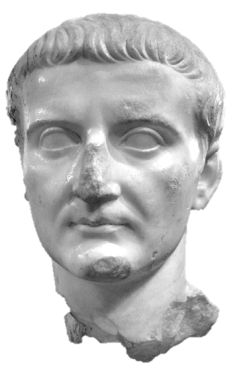
tibero
The second Roman Emperor, Tiberius (r. 14-37 AD) was much loathed by the Senate. As a later member of the senatorial aristocracy, Tacitus (56-120) did not consider Tiberius favorably.

The Bias of Tacitus

The Annals by Tacitus is a written account of Roman history covering the period from the death of Augustus in 14 A.D to the reign of Nero (r. 54-68). Tacitus states that his purpose is to write without bitterness or partiality, but much of his account of the Emperor Tiberius (r. 14-37) seems biased given what we know about his reign. For the large majority of the Roman public, the rule of Tiberius was relatively peaceful. A person would not be in danger of violence unless they were a member of the imperial family or a member of the aristocracy. Tacitus demonstrates his inability to be impartial by stating that historians during the reigns of Augustus through Nero were unable to write the truth out of fear. He writes:

“Fine intellects were not wanting to describe the times of Augustus, till growing sycophancy scared them away. The histories of Tiberius, Caius, Claudius, and Nero, while they were in power, were falsified through terror, and after their death were written under the irritation of a recent hatred.” The Annals,  I

Rome during the imperial age had lost its “fine Roman character” that it had during the republican period and the harsh criticisms of Tacitus come from holding up the empire to the standard of the republic. The personal bias of Tacitus towards Roman Republican virtue seeps into his writing. He is often very critical of the imperial system and the Emperors themselves in the context of Republican virtue.

The Murder of Agrippa Postumus (14 AD)

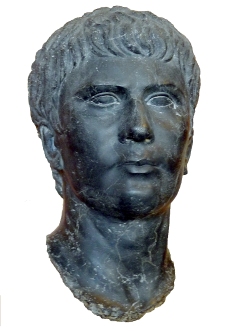
p1080702_louvre_agrippa_postumus_mnd1961_rwk
Agrippa Postumus was the son of Marcus Agrippa and the daughter of Augustus, Julia. Unlike his father, a favored general and close friend of the first emperor, Postumus was known for his brutish and unpalatable character. His murder in AD 14 was likely orchestrated to prevent him from challenging the succession of Tiberius.

According to Tacitus, the corruption of Rome began with Augustus, who with money and cheap food was able to concentrate on the functions of the senate . With all rivals dead, Augustus ruled unopposed and (according to Tacitus) the remaining nobility were more than willing to accept slavery for the sake of wealth and titles. Tiberius wasn’t originally interested in donning the purple but out of sheer luck (or Livia’s intervention) he became emperor after the death of Augustus. The opening act of his reign was a crime committed in the securing the throne. Agrippa Postumus, another one of Augustus’ adopted children, was murdered by his guards. Tacitus called this a crime, ignoring Tiberius’ claims that he was acting out on Augustus’s orders. Since Tiberius mentioned the death of Postumus to the senate one has to wonder how Tacitus would have known what was said on the matter outside of court records. The historian Walter Allen Jr. claims that historians accept the claim of assassination is because of the opportune time in which it came. Allen states:

“while stories about the death of Agrippa Postumus very likely arose out of similar gossip, Tacitus feels at liberty to treat them as fact because he has a reputable source upon which he depends; since the gossip had somehow crept into history, Tacitus had no qualms about repeating it.”

The liberal usage of gossip as fact is just one of many instances of Tacitus trying to blacken Tiberius’s character.

Continue reading “Emperor Tiberius According to Tacitus”

The Radicalization of the French Revolution

By T. 

In 1789, when the Estates-General was called by Louis XVI, only a small fraction of the delegates selected were members of the Jacobin club. However, by 1793 the most radical Jacobins had established a virtual republican dictatorship. How did this political minority experience such a meteoric rise? How did Revolutionary France transform from a constitutional monarchy into a republican dictatorship? The downfall of the revolutionary republic cannot be explained by any one factor. The execution of Louis XVI, war, political factionalism, and revolutionary fervor can all be attributed to the political gains of the Jacobin club. It is telling that within the National Assembly the extreme wing of the Jacobins would become known as the Montagnard, or the Mountain.

Girondins
The Girondins, Paul DelaRoche (1843). The Girondins were the dominant political faction within the Jacobin club until 1793, when their relative moderation and support for foreign wars led to their increasing unpopularity.

The Flight to Varennes and the Creation of the First French Republic

The end of the constitutional monarchy was critical to the rise of the Jacobins; the monarchy fell largely due to the Varennes flight. On the 20-21st of June 1791 King Louis XVI and his family attempted to flee France to the Austrian Netherlands. With the King’s flight and eventual arrest, debate ensued on whether or not France should remain a constitutional monarchy.

When public papers began printing the king’s declaration explaining his flight (where he denounced many revolutionary decrees) hundreds of political clubs began to be created across France; over 400 houses were affiliated with the Jacobin club. By mid July of that year popular opinion was decisively against the monarch, with only 1 in 6 provinces showing any sympathy towards the King. This is in stark contrast to the previous public opinion immediately after the king’s capture: citizens had been more inclined to believe that the King was ill-advised or kidnapped.

Continue reading “The Radicalization of the French Revolution”

The Saxons (Part 1)- Early History and Geography

By N. 

Most famously known for their invasion of post-Roman Britain, the Saxons are a tribe important to Western history. Their interaction with the Romans in late antiquity characterized them as opportunistic pirates and raiders, yet they would go on to be a founding element of English civilization. Later, the Saxon Wars (772-804) with Charlemagne would be critical to the Christianization of central Europe; these conflicts would also presage the Viking raids that would devastate the Carolingian Empire. Here, I hope to give an account of Saxon history from the earliest times with a focus on their life on the European continent, though some discussion will be spent on their invasions of England.

The Saxons: Early Sources

The Saxons are first mentioned with certainty in history from the writings of Ptolemy (100-170 AD), a Greek Egyptian born under Roman rule in Alexandria. Ptolemy, in his tenth chapter of Geographia (150 AD)¸ writes about the Germanic peoples inhabiting the lands east of the Rhine river (Rhenus), north of the Danube (Danubius), and west of the Vistula. This work was written during the reign of Marcus Aurelius.

Continue reading “The Saxons (Part 1)- Early History and Geography”

Athens and the Greek World, 404-200 BC

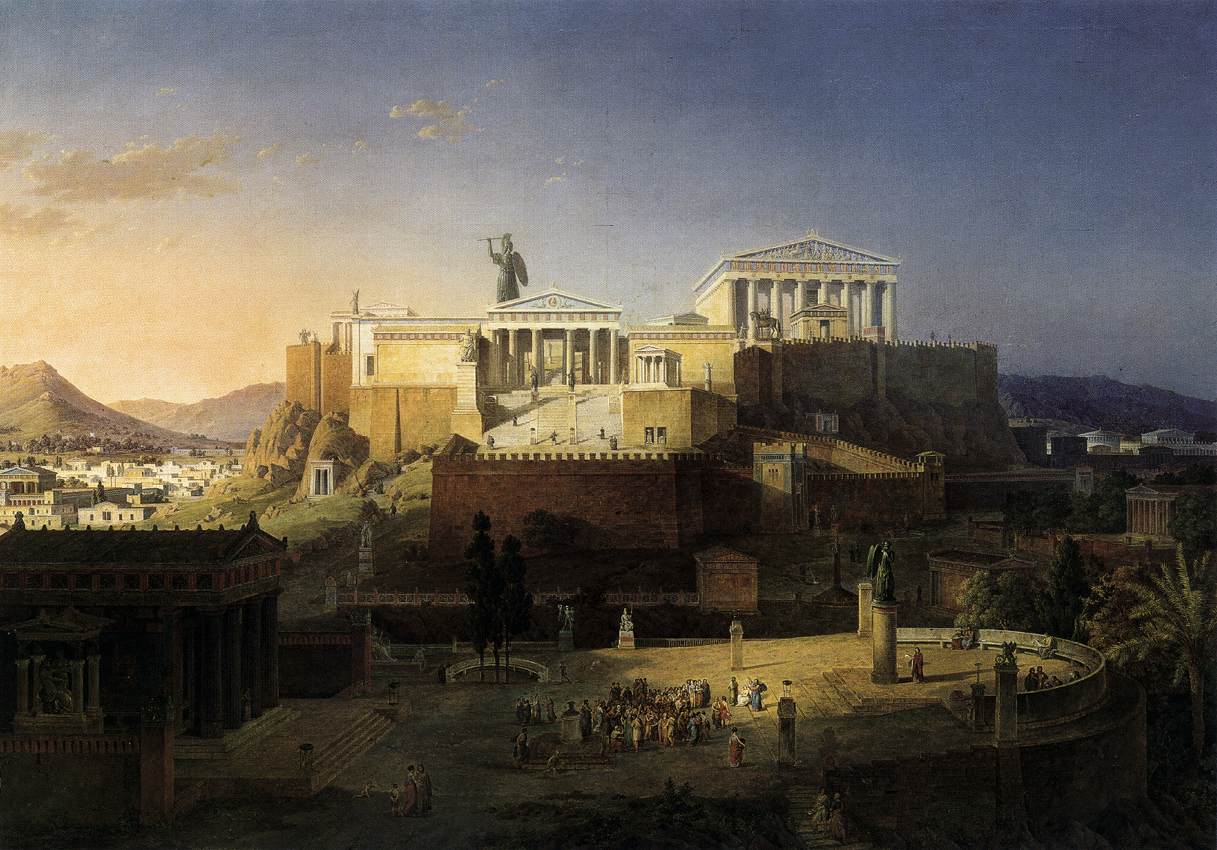
 The Acropolis at Athens, Leo von Klenze (1846)
The Acropolis at Athens, Leo von Klenze (1846)

By N. 

Classical Athens is a common subject of study. Rising to prominence among the Greek city states, Athens exerted cultural and economic control throughout the Greek world. Home to many of the most famous figures of Ancient history, the classical city-state produced Pericles, Socrates, Plato and other famous individuals. However, after Athen’s defeat during the Peloponneisan War (431-404 BC), the city’s political history is often overlooked. Although no longer the center of a regional empire, Athens was still was an economic and cultural center of Greece. The following is a brief overview of Athenian political life after 404 and before the entry of Rome into the eastern Mediterranean.

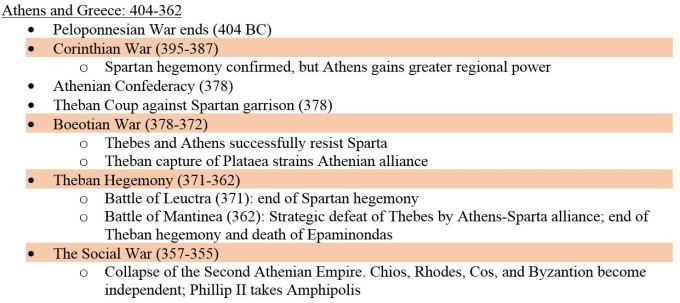
Athens and Greece- from 404 BC to the Macedonian Invasion (356)

The Peloponnesian War resulted in the loss of Athen’s empire, and Sparta became the chief power (hegemon) among the Greek cities. For the next 50 years, Athens would struggle to regain her former political influence, bringing the city-state again into conflict with her arch-rival Sparta. After further conflict with a new Theban hegemony (362), all of Greece became vulnerable to a rising northern power.

Athens and Greece 404-456

Immediately after the war, Athens was forced into becoming a “subject-ally” of Sparta and had its democracy abolished. Sparta was always unhappy with Athenian democracy and sought to replace it with a more familiar form of government. The Spartan-approved Thirty Tyrants ruled Athens as oligarchs, though their reign was short lived- Athens was again a democracy by 403.

Continue reading “Athens and the Greek World, 404-200 BC”